

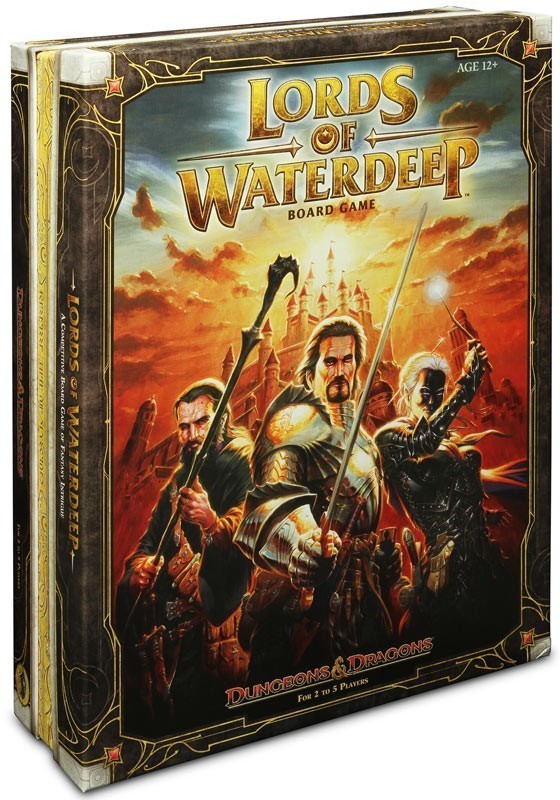
Dungeons and Dragons! One of the most iconic and beloved game franchises of all times! Many folks have had their first gaming experience through this faithful game, and many more are experiencing it today, now in ways more than just the traditional role playing atmosphere!
Enter Wizards of the Coast, Lords of Waterdeep, which is based in the Forgotten Realms Dungeons and Dragon’s universe, inside the merchant city of Waterdeep. This is a euro-style worker placement game that plays with 2-5 players, in about 90 minutes (If everyone knows the rules.)
What is a worker placement game you ask? Well continue on good reader! We shall explain all to you in the following paragraphs.
Basic Premise
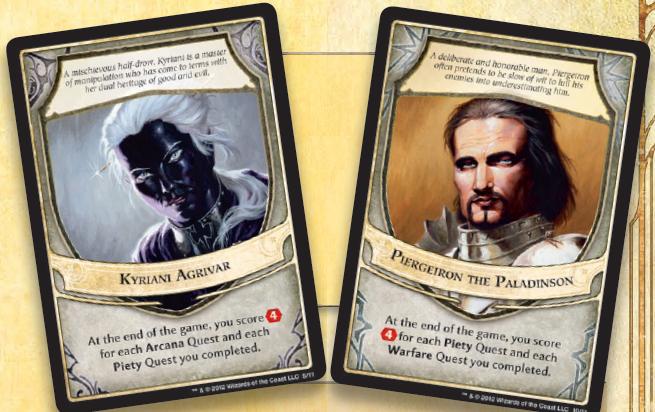
Waterdeep’s Lords are famous for their anonymity… this is harder for the drow to keep then the humans for obvious reasons
In Lords of Waterdeep, each player is given a random “Lord” card, which they keep secret from the other players. These cards have a different end game bonus, when tallying victory points, so keeping your secret agenda from the other players is a must! Least they discover your true goals and act to thwart you. All the while, you are constantly kept guessing as to your opponents true motives as you play.
Your overall goal, is to use your Agents (Little wooden meeples) in various areas of the city of Waterdeep, spreading your influence to build buildings, recruit heroes, complete quests, gain Intrigue, and amass the most victory points at the end of the day. More often then not, you’ll be obtaining the most of your points from completing quest cards, as this shows you are capable of keeping the city safe. But other factors can swing your points significantly.
Rules
Each player gets a set amount of Meeple Agents (Or workers), that they will take turns placing in different areas of the city to gain special rewards and effects. The game board starts with several basic buildings, but also provides access to a Builder’s Hall, where you can build a randomised selection of new buildings to suit your needs.
Players are given the option to play one Agent and complete one quest, in either order. Quests are completed by sending off some Heroes and or spending some money. To represent heroes, the game uses small cubes, with each colour representing a different type of typical hero you would find in Dungeons and Dragons. IE: Purple are Wizards, Orange are Fighters, White are Clerics and Black are Rogues. Whilst the money itself is represented by interestingly shaped cardboard tokens. Depending on the buildings your Agents visit, will determine the amount and type of Heroes and or money resource you obtain.
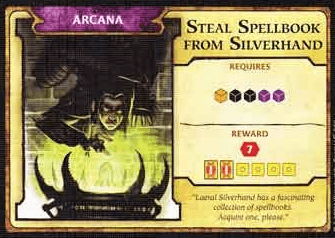
Quests are always tied into the local fluff and lore surrounding Waterdeep
Each quest meanwhile has a type, like Arcana, War, etc, which possibly impact the end of game scoring for Lords (As some lords gain a bonus for having completed different types of quests.) Once a quest is completed, the lord who manages to overcome the task claims an immediate printed reward as well as the quest card as a trophy.
The game is played over 8 rounds, each full round only ends after all players have completely distributed all the available Agents they have in play. (as it is possible to recruit more agents during the course of the game, so some players may play for “longer” then others each round as they have more agents in the field.) Once the final turn is complete, each lord tallies up their money, additional left over Heroes, bonuses for completed quests, and lastly the points from their hidden objective. The Lord who has the highest total is declared the Lord of Waterdeep! (and hence the winner)
Another mechanic is Intrigue cards, which provide a more direct method for lords to influence affairs in the city. The cards can be either beneficial to you and others or harmful in that they negatively effect your foes. Some even take the form of “mandatory quests” which their foes MUST then complete prior to completing any others, essentially locking an ambitious foe down as you can only complete one Quest per turn, not to mention the additional resources required to pay for it, with almost little reward.
Mulling over mechanics: Worker Placement
The essence of this game lies in the “worker placement” mechanic shared among many Euro style boardgames. A worker placement game is any game in which players place one or more pawns on a play surface to claim the right to do a specific action. This generally means that no other player can do the same action that turn, so going before your foe will “lock them out” of a potential action (Many games include exceptions to this rule of course, but thats a discussion for another day!).
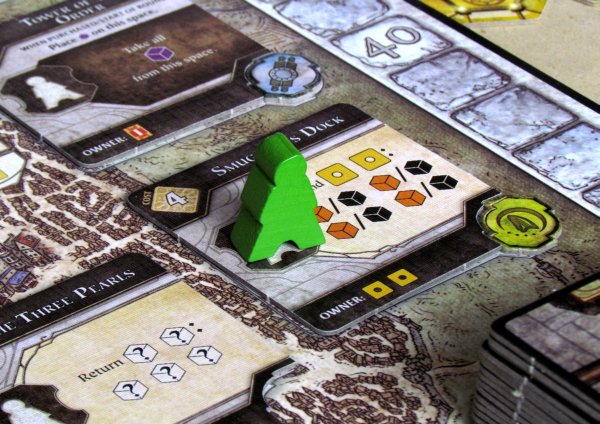
A single blocked placement can have other players cursing your name for the rest of many games to come
Thus, in our case of Lords of Waterdeep, players take turns placing “agents” on locations within the city of Waterdeep. Each location grants a specific action. In general, Waterdeep locations can accommodate just a single agent. Thus, turn order becomes a vital consideration (for if you get there first, you can claim your pick of the city.) so placing your agent on the “Gain the first turn marker” for the next round is often a wise investment for anyone down low on the chain of players. The mechanic itself is a clever one and creates a lot of the indirect conflict in Euro style games (as instead of directly attacking your foes resources, you are instead preemptively cutting them off at the source.) This mechanic is one of my favourites to see in a boardgame, as it often requires a careful finesse to pull it off successfully.
Replayability
Besides the fact that the Lord you play and the quests that come up are randomised, One of my favourite unique aspects of this game is the additional buildings players will have access to throughout each play-through, essentially resulting in a different board each time the game is played. Each game starts with 3 buildings from a shuffled stack face up in the Builder’s Hall, which will allow a player to play them, and become the Owner of them. (Owners of course take a cut of the profits from the building when it is used, so getting some good buildings up in any game is a must!) Each building essentially expands the board space, as it offers its own agent location in the city for others to use, often better then the selection of spots currently available.
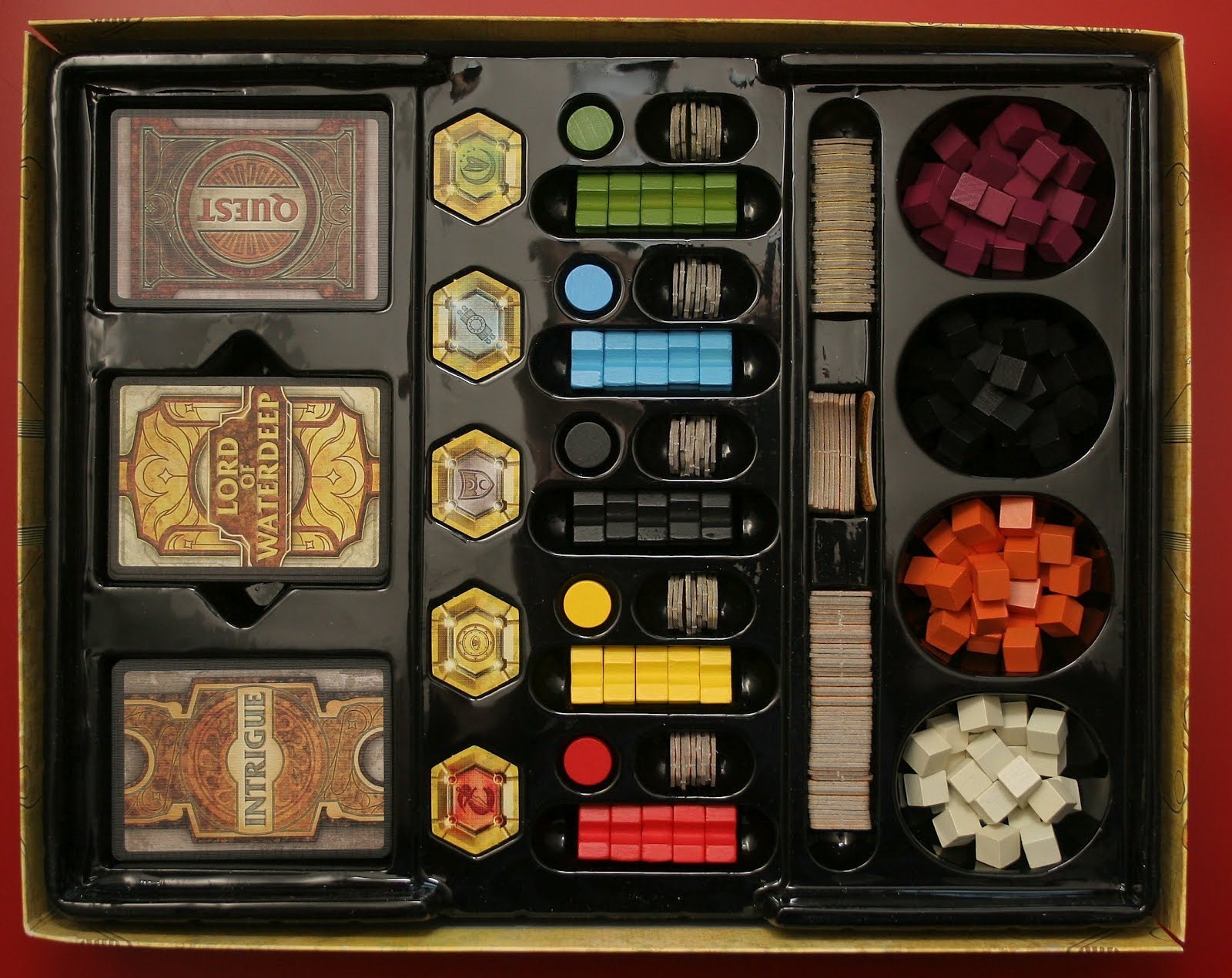
Pre-packaged Box control *drools*
Product Quality
The components provided are of extremely high quality. All of the “pieces” are made from good quality wood or thick card stock. The game is shipped in a solid box with a specifically designed plastic inlay which stores the entire game beautifully. The cards are regular-sized, good quality card, so finding sleeves for them is quite easily.
Final Thoughts
As I’ve discussed, there is a large amount of strategy and replay ability in Lords of Waterdeep. Thematically, the design team at Wizards have done an amazing job interbreeding the feel of role playing and adventure from Dungeons and Dragons, with the political influence and majesty of a good euro worker placement game. A lot of thought has gone into the Quests themselves to make them both mechanically and thematically sound so that they impact the game just as you’d expect them too. This is coupled with the fact, that by shuffling all the Quests, Intrigue, and Building cards each game, and the randomized Lords, you end up with a great amount of replay value and differentiation between games.
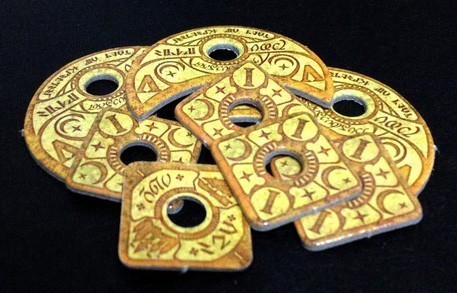
This is the games currency. An interesting take on monetary shapes
Overall, the game provides a very social vibe, as interaction is forced due to the building ownership rules. Each turn is alive and interactive with people quickly placing Agents and completing Quests that will impact other player’s choices!
The final hurdle of course that we must face! Is it a good game? Or are we looking at something that Wizards simply said, “Hey, let’s slap the DND name on it, they’ll love it!”? Immersive gameplay, high replay value, engagement from end to end, a well established thematic base, and a fun game overall means it’s a popular choice on game nights. Wizards have done themselves a favour with this title and I highly recommend it to anyone who likes Euro games.
The game generally retails for around R700, with its expansion coming in cheaper.
Also, as a final note, if you prefer, third party meeples to be found online for replacing the hero “cubes” to give them an even deeper thematic experience. These unfortunately are very pricey to import, often rather ironically costing almost as much as the boardgame itself!
Keen to give it a try?
Geek of all Trades and DeeTwenty are going to be hosting an international Boardgames day on Saturday, April 11, 2015 from 9:00 AM. Register here, or join the Facebook Event Here Come join us and give the game a go!