
Hi there folks!
Continuing our theme of Alternative Roleplaying game January, I’ve decided to collect my thoughts on Monte Cook’s even newer game The Strange
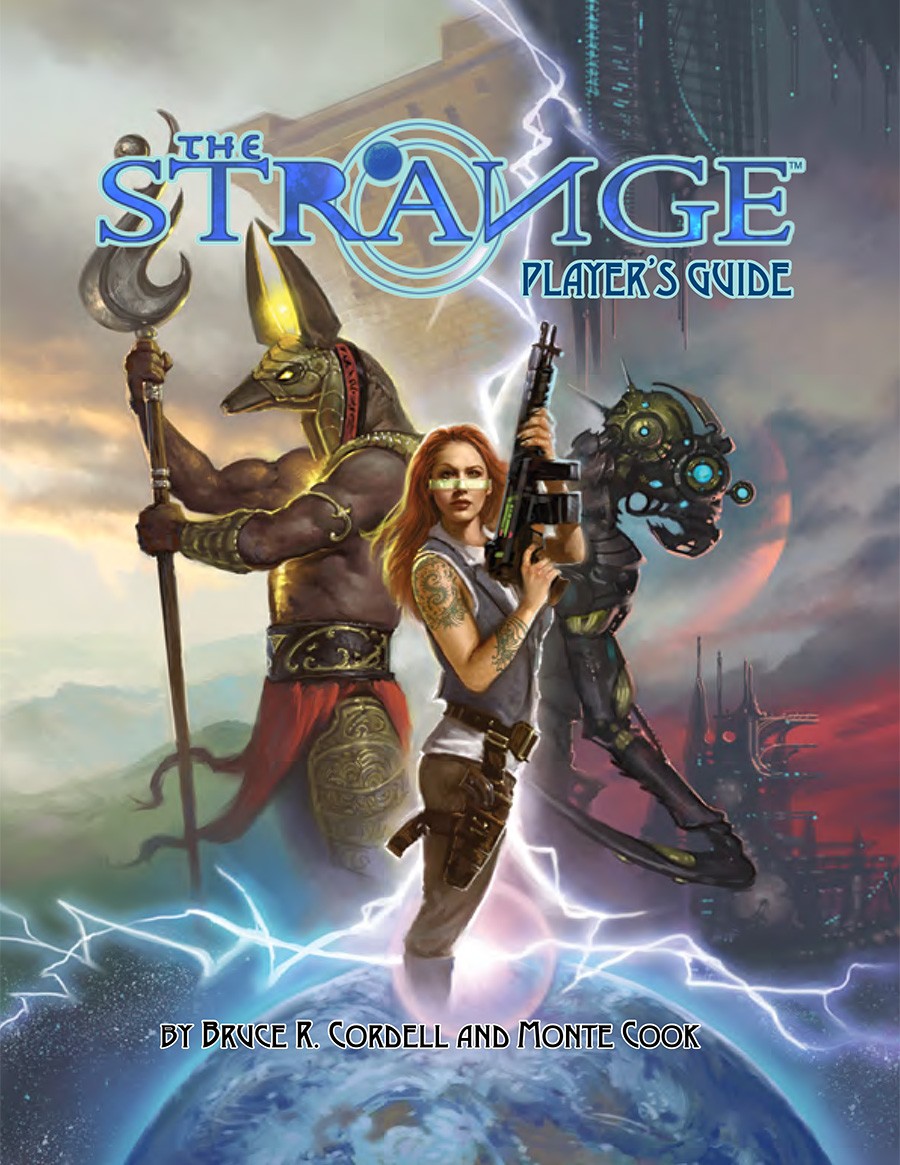
Whilst I have not actually played or run a game of The Strange yet, I’ve been interested in this title ever since I discovered its existence. The fact that it uses the Cypher system that Numenera pioneered (which I have been enjoying), is a massive positive in its favor too of course!
The second reason I have taken an interest is because it’s rooted in a modern Earth setting, but entails the wonderful concepts of time travel, dimension hopping and other assorted weird things.
I love weird things
Not to mention Monte Cook originally mentioned that a lot of his inspiration was drawn from shows like Fringe and Sliders which I have delighted in consuming the various plots of over the years.
WHERE DOES IT ALL BEGIN?
Strange, much like its Numenerian cousin delights in the concept that “Anything is possible”. Unlike its cousin however it’s setting is based on today, not the future, so it doesn’t just explain away all the weird and wonderful with a “Hey it’s the future!” approach, but rather a mysterious “DARK ENERGY NETWORK” called The Strange (Which I’m pretty sure always has to be written in capitals it’s so mysterious) This network acts as an interconnected web of multidimensional realities, at the center of which is a cluster of realities called “The Shoals of Earth”.
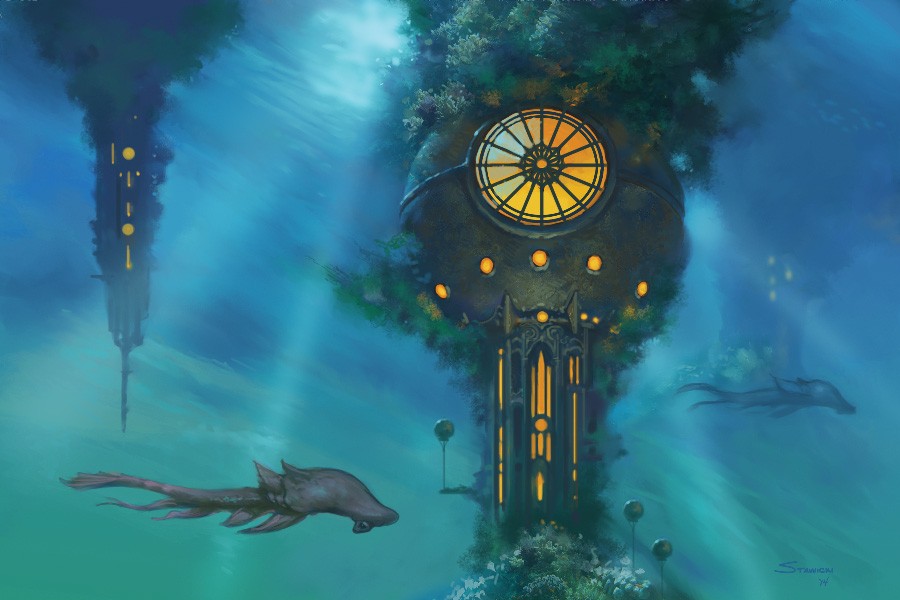
These close realities (Or Recursions as the game likes to call them) bear a passing resemblance to our own and in fact include our own within its number (hence the name), however the further you get from our reality the more likely our own laws and variables alter and change. Whilst it’s clear you can take almost any reality and find a way of gluing it in as an adjoining recursion, they’ve taken the time and effort in the book to highlight some. One example is Ardeyn, which is a High fantasy type realm ripe with bizzare physics changes that is easily described as “sorcery” by the locals, and Ruk, which is a dystopian world of science incarnate, filled with cyborg death machines and bio mechanical abominations.
Of course, with infinite possibility there has to be quite a handful of recursions where A.) They are aware of The Strange and B.) They have a motive to try and infiltrate, conquer or destroy our planet.
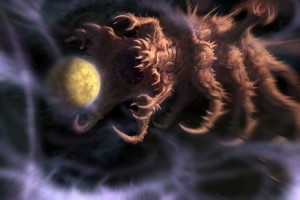
I’m not quite sure I like our new neighbors
This is where the players come in!
Our faithful band of heroes have been “quickened” (No, not like The Flash)
Essentially they have become aware of the other recursions and the existence of The Strange for some reason and have discovered a way to tap into the DARK ENERGY network to give them the ability to transverse it, along with neat powers as a side effect (Oh wait… maybe it is like the Flash…)
Interestingly, the book goes on to describe how this isn’t like jumping through a portal or teleporting yourself across the multiverse (although those are certainly possible too and do happen) this is actually manifesting your consciousness into living existence in another recursion. Thus, quite easily, you can center the game around modern day people, with real life jobs and worries, who secretly project their minds into another universe to become an entirely different entity, to fight off unknown threats that want to take over or consume our home.
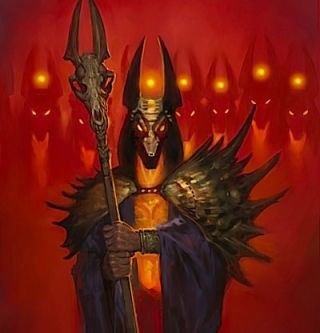
This is my other day job
OR, if you’re more inclined to keep it local, back on “modern earth,” we have a crazy amount of governments, factions and conspiracies pulling power plays on one another. The players could be fighting (or running…) cabals of bizarre extra dimensional mind control aliens planting themselves in our society or a cults of humans who are trying to exploit The Strange for their own agendas.
It’s literally an infinite universe to work with, yet, ironically you could probably spend years just exploring all the zany stuff while defending your own backyard. (hmm… own back yard… scribbles down potential adventure arc notes)
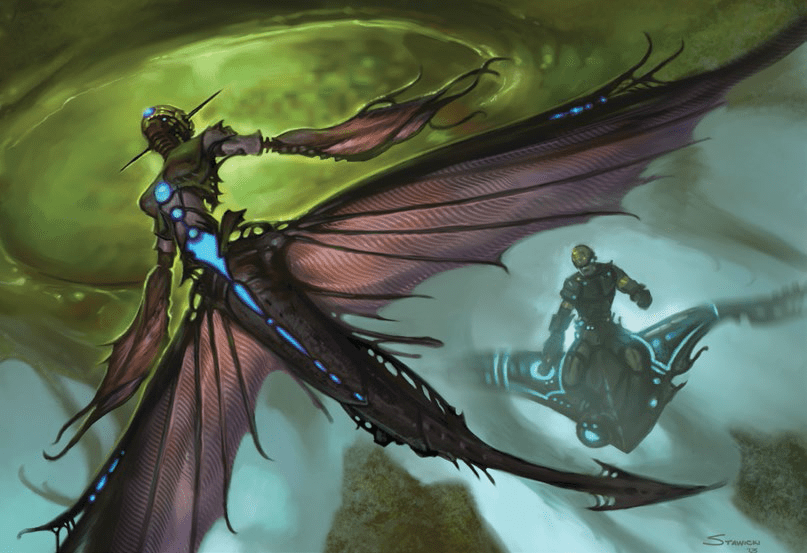
You’re not from my garden service!
RULESET: THE CYPHER SYSTEM
Now I’m not going to go into too much detail on the Ruleset, as we just did a review of Numenera and the rulesets are essentially the same.
As before you have your three stat pools (Might, Intelligence, and Speed), but rather than the usual Numenera classes, you get the three different classes of Vector, Paradox and Spinner.
Once again it’s essentially “Guy who stabs good, Dude who bends reality with his mind and lastly, the irredeemable skill junkie” with nice fluffy names. They still have the same method of character generation in that you need to decide on the phrase “I am a(n) <ADJECTIVE> <NOUN> that <VERBS> .” Which, at the end of the day is you picking out a Descriptor, Type, and Focus. It’s easy to look at “I am a Sceptical Spinner who performs mad science.” and have a pretty good idea of what the character’s basic concept boils down too.
Interestingly, the book lists unique focuses for different recursions in the book, so if you come from the crazy science recursion, you could easily have the “Processes Information” verb, but if you come from a high fantasy setting, you could easily have “Channels Sinfire”. This opens up a lot more interesting doors, as you could have player’s originating from other recursions who have found their way to our earth with some really bizarre powers and abilities
The designers also decided to keep Cyphers and not rename them. (I guess that makes sense in the CYPHER system) Cyphers are one-time use items and each player has a limit to how many they can carry based on their class and level.
A lot of folks draw the “Potions and scrolls” analogy from these items, but from my experience in Numenera with them I’ve found them to be quite different, mostly because the limitations result in the players burning through them at a crazy rate, along with the fact that they each do such unique and different things. The players are constantly pushed to find some way of creatively using their one shot cypher in a situation, least they find more loot after and have to leave a cypher behind!
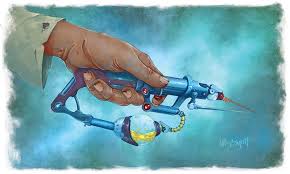
There is a good chance injecting yourself with this will make your bones magnetic… let’s try
WORLD BUILDING, PLAYER STYLE
On a final note of interest, The Strange ruleset provides very detailed guidelines and rule for a player to invest into their own unique recursions. All they need to do is acquire a chunk of matter called a “reality seed” and then find a nexus point. Lastly, they have to performing a process that involves investing their own experience into it, then viola! They have created their own pocket dimensions with several customised laws and rules. Of course, these recursions will grow over time… first to the size of large house, then a full estates and eventually even city sized within several years. This reminds me greatly of the Dnd Epic spell Genisis which allowed you to create pocket planes. I imagine the work required to create such a recursion would make quite a fun adventure arc for a group. In fact, The Strange website already has a Recursion Index website, where everyone can upload their own unique recursions for others to play in. (Although I notice that rather sneakily, anything you upload there you lose any copywrite too, so don’t post your loving crafted science fiction setting you one day want to publish, Least the Strange picks it up themselves and beats you to the punchline!).
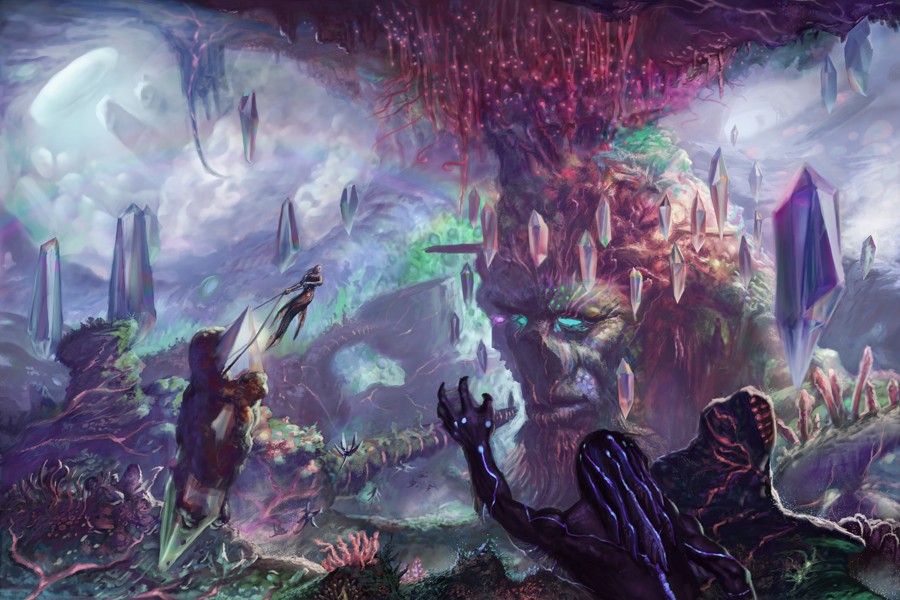
Recursions can get a little bit weird if you mix the right laws of physics in
FINAL THOUGHTS
The Strange has found a clever niche in that it’s in a comfortable sweet spot for a genre-hopping game. It’s rule set is light enough that you can get away with adding almost anything in, as it doesn’t feel the need to define everything with complicated rolls, yet still has enough crunch to ensure that the game master doesn’t have to adjust the game rules and tailor it to each specific setting (Like when using Fate or Savage Worlds) The nature of the rules allow it to be easily expanded by new content from Monte Cooks labs, or even by an enterprising group of players who want to write their own world into existence. Certainly worth a look, specially if you’ve grokked Numenera’s cypher system. after all, the possibilities are infinite…
Art contained within this article belongs to Monte Cook Games, LLC © 2014
THE STRANGE and its logo are trademarks of Monte Cook Games, LLC in the U.S.A. and other countries. All Monte Cook Games characters and character names, and the distinctive likenesses thereof, are trademarks of Monte Cook Games, LLC.